Smart Contracts: The Simple Guide to How They Work and Why They Matter
Smart contracts are changing the way people do business online. You no longer need a bank, a lawyer, or a middleman to make sure a deal is honoured. A smart contract does that job for you, automatically, using code instead of paperwork. In this guide, we will explain what smart contracts are, how they work, where they are used, and why they are becoming so important in the world of blockchain and Web3.

What Are Smart Contracts?
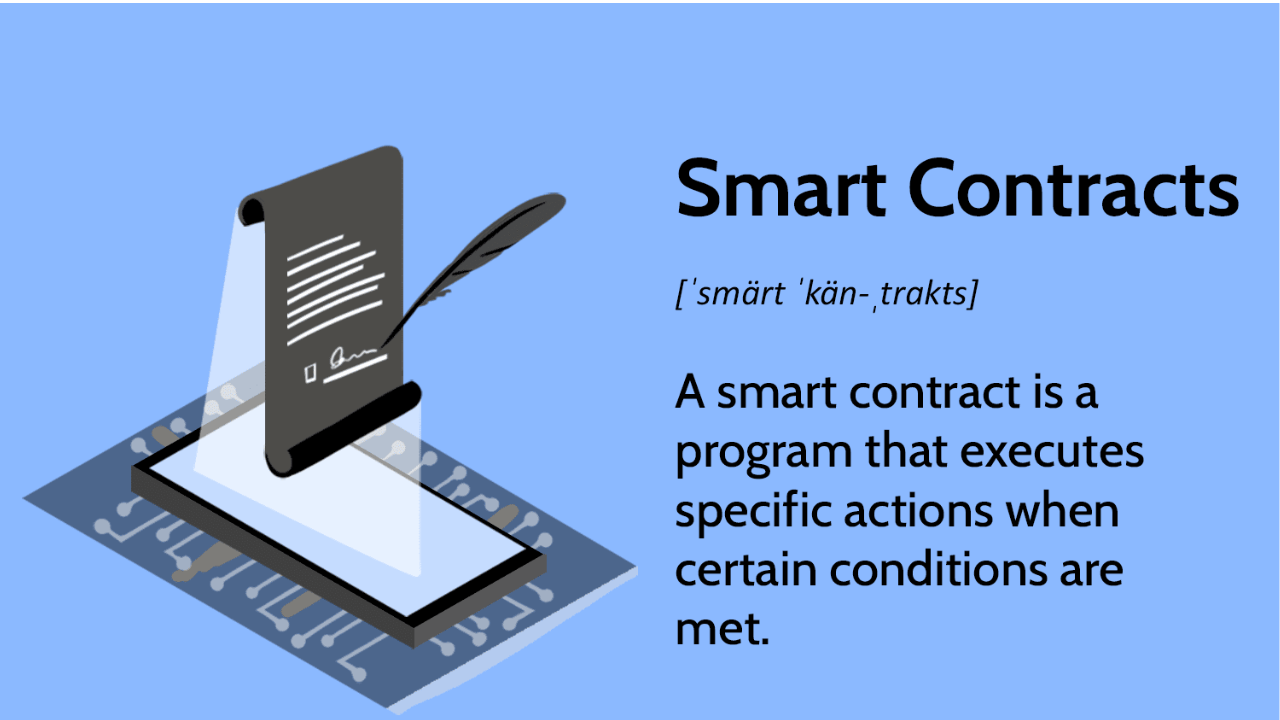
Smart contracts are simple computer programs that run on a blockchain. They store a set of rules, and when those rules are met, the contract carries out an action on its own. No person needs to press a button. No company needs to approve it. The code does the work.
Think of it like a digital vending machine. You put in the right amount of money, you press a button, and the machine gives you a snack. There is no shop assistant standing there checking your order. The machine simply follows its programming. Smart contracts work the same way, except instead of snacks, they can transfer money, release property, confirm ownership, or complete almost any agreement you can imagine.
Because smart contracts run on a blockchain, they are:
- Transparent – anyone can view the contract code
- Immutable – once deployed, the contract usually cannot be changed
- Automatic – the contract executes itself once conditions are met
- Permissionless – anyone can create or interact with one
How Do Smart Contracts Work?
A smart contract is written in code and then stored on a blockchain network, such as Ethereum. Once it is deployed, it lives at its own address, just like a regular account. It can hold funds and take part in transactions, but no single person controls it after it goes live.
Here is a simple example of the logic:
- Two people agree on a deal (for example, a rental agreement).
- The rules of that deal are written into the smart contract’s code.
- The contract is deployed to the blockchain.
- When the agreed condition is met (such as payment being received), the contract automatically releases the next step (such as access to the property).
There is no need to trust the other person directly. You are trusting the code, and the code is visible to everyone.
Why Smart Contracts Are Important
The biggest advantage of smart contracts is that they remove the need for a middleman. Traditionally, contracts require a third party, such as a bank, a notary, or a legal firm, to confirm that both sides keep their promise. This adds cost, time, and sometimes unfairness.
Smart contracts solve this by letting the code act as the enforcer. This brings several benefits:
- Lower costs – no fees for lawyers, brokers, or agents
- Faster execution – deals settle in seconds or minutes, not days
- Greater trust – the code is open, so both sides can check it
- Fewer errors – there is no manual paperwork to get wrong
- Global access – anyone with an internet connection can use them
This is one reason smart contracts have become a core part of decentralized finance (DeFi), where they power lending, borrowing, trading, and staking without any central authority.
Real-World Uses of Smart Contracts
Smart contracts are already used in many industries, not just crypto trading. Some common examples include:
- Finance – lending platforms, insurance payouts, and automated trading
- Real estate – transferring property titles once payment clears
- Supply chain – tracking goods and releasing payment on delivery
- Healthcare – securely sharing patient records with permission rules
- Gaming and NFTs – proving ownership of digital items automatically
Because smart contracts are composable, developers can even connect one smart contract to another. This means new products can be built on top of existing ones, similar to open building blocks.

Limitations of Smart Contracts
Smart contracts are powerful, but they are not perfect. It’s fair to understand the downsides too.
- They cannot access real-world information on their own. They need a tool called an oracle to bring in outside data, such as prices or weather reports.
- Once deployed, most smart contracts are very hard to change, even if a mistake is found.
- Writing secure code takes skill. Poorly written contracts can be hacked or exploited.
- Blockchain transactions often come with gas fees, which can rise during busy periods.
This is why security audits are so important before a smart contract goes live.
Smart Contracts vs Traditional Contracts
| Feature | Smart Contract | Traditional Contract |
|---|---|---|
| Enforcement | Automatic, by code | Manual, by people or courts |
| Speed | Seconds to minutes | Days to weeks |
| Cost | Low (gas fees only) | Often high (legal fees) |
| Transparency | Fully visible on-chain | Often private |
| Flexibility | Hard to change once live | Can be renegotiated |

Conclusion
Smart contracts are one of the most useful tools to come out of blockchain technology. They remove the need for middlemen, cut down on costs, and make agreements faster and more transparent. From finance to real estate to healthcare, smart contracts are already changing how people do business online. As blockchain technology keeps growing, smart contracts are likely to become an everyday part of digital life, not just something used by crypto experts.
FAQs
1. What is a smart contract in simple words? A smart contract is a computer program on a blockchain that automatically carries out an agreement once its conditions are met, without needing a middleman.
2. Are smart contracts legally binding? This depends on the country and the situation. In many places, smart contracts can support or work alongside legal agreements, but laws are still developing around this topic.
3. Which blockchain is best for smart contracts? Ethereum is the most widely used platform for smart contracts, though other blockchains such as Solana, BNB Chain, and Polygon also support them.
4. Can a smart contract be changed after it is deployed? Usually not. Most smart contracts are immutable once deployed, which is why testing and audits are done before launch.
5. Do smart contracts cost money to use? Yes. Users typically pay a small network fee, known as a gas fee, to deploy or interact with a smart contract.
6. Are smart contracts safe? They can be very safe if written correctly and audited by security experts. Poorly written contracts, however, can be exploited by hackers.
References
- IBM – Smart Contracts
- Investopedia – Smart Contracts
- Ethereum.org – Introduction to Smart Contracts
- Coursera – Smart Contracts
- Iberdrola – Smart Contracts
- Hacken – What Are Smart Contracts?
Leave a Reply